
2026 Invited Speakers
 Dr. Prof. Delfín Ortega-Sánchez
University of Burgos, Spain
Biography: Prof. Dr. Delfín Ortega-Sánchez is Full Professor of Didactics of Social Sciences at the University of Burgos. He holds three doctoral degrees, PhD in Didactics of Social Sciences (Universitat Autònoma de Barcelona), PhD in Education (University of Burgos), and PhD in the History of the Americas (University of Extremadura), each awarded with an Extraordinary Doctoral Award. His research focuses on education for democratic citizenship, the curricular inclusion and didactic treatment of controversial issues and social problems, literary education, equality, transdisciplinarity, and the pedagogical use of educational technology.
Currently, he serves as Vice-Rector for Institutional Relations, Culture, and Social Projection at the University of Burgos, and as Director of the Chair in Human Rights and Democratic Culture - Auschwitz Birkenau National Institute, the only one worldwide in direct collaboration with the Auschwitz-Birkenau State Museum. In recognition of his impact, he was distinguished among the world’s top ten Social Sciences researchers in the USERN 2022 World Prize.
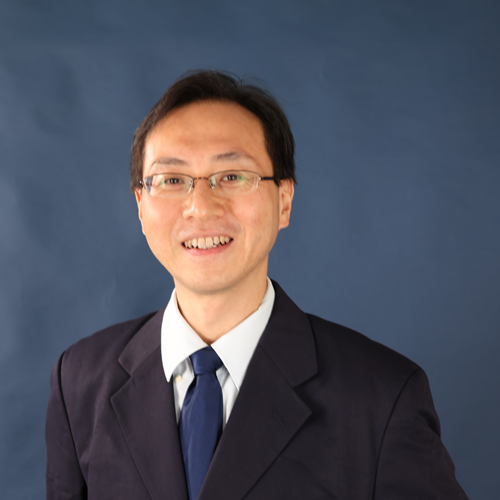 Dr. Kim Hung Joe Lam
The Hong Kong Polytechnic University, Hong Kong, China
Biography: Dr. Kim‑hung Joe Lam (MBA, IHERD Fellow; FAHE) serves as Senior Lecturer and Programme Leader of the Analytical Sciences for Testing and Certification (ASTC) programme in Department of Applied Biology and Chemical Technology, The Hong Kong Polytechnic University. He is also currently a Fellow of the Institute for Higher Education Research and Development (IHERD) and a Senior Fellow of Advance HE (FAHE).
Speech Title: Using Educational Technology to Foster Active Learning Among University Students
This presentation highlights the implementation of educational technology (EdTech) and artificial intelligence (AI) tools to enhance student learning and engagement in both classroom and laboratory settings. A range of university-supported digital resources, including the Learning Management System (LMS), open educational resources, uReply, video platforms, collaborative documents, immersive technologies, and AI-generated tutorial materials, were integrated to support learning both inside and outside the classroom. These tools transformed traditional teaching environments into more interactive and student-centred learning spaces by facilitating collaborative group activities, flipped-classroom quizzes, and video-assisted pre-laboratory preparation. Student feedback consistently indicated that these digital innovations contributed positively to their learning experience and academic engagement.
 Prof. Jie Yang
Shanghai Jiao Tong University, China
Biography: Jie Yang received a bachelor’s degree in Automatic Control in Shanghai Jiao Tong University (SJTU), where a master’s degree in Pattern Recognition & Intelligent System was achieved three years later. In 1994, he received Ph.D. at Department of Computer Science, University of Hamburg, Germany. Now he is the Professor and Director of Institute of Image Processing and Pattern recognition in Shanghai Jiao Tong University. He is the principal investigator of more than 30 national and ministry scientific research projects in image processing, pattern recognition, data mining, and artificial intelligence. He has published six books,more than five hundreds of articles in national or international academic journals and conferences. Google citation over 29300,H-index 88. Up to now, he has awarded six research achievement prizes from ministry of Education, China and Shanghai municipality. He has owned 48 patents. Three Ph.D. dissertation he supervised was evaluated as “National Best Ph.D. Dissertation” in 2009, in 2017, in 2019. He has been chairman and keynote speaker of more than 20 international conferences. He is selected in the list of 2025 World Top 2% Career-long Impact Scientists issued by Stanford University and Elsevier.
Speech Title: To be added soon
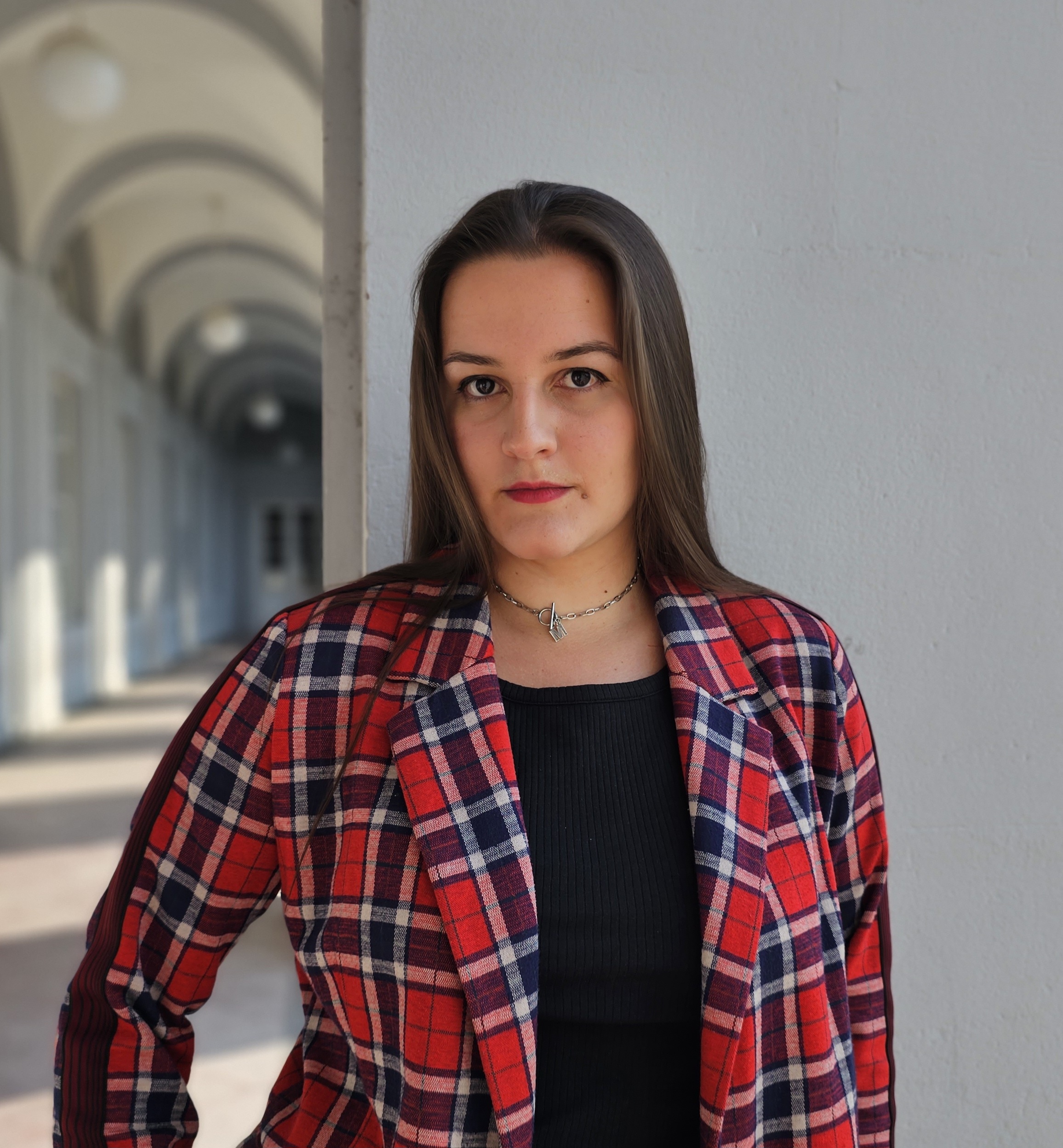 Researcher Marina Ernst
University of Koblenz, Germany
Biography: Mairna Ernst is a researcher and PhD Candidate at the University of Koblenz, working on artificial intelligence and information reliability. She teaches courses on data technologies and studies how large language models evaluate and explain the credibility of information.
Speech Title: Invisible Co-Reviewers: LLMs and Peer Review Quality in Higher Education
Peer review helps students to develop the critical evaluation skills needed to check the accuracy and consistency of academic work. As LLMs become more widely used in higher education, they may also influence the way reviews are conducted.
In this study, we compared peer reviews written by students with reviews generated by LLMs using a research article that contained deliberate errors. While LLMs identified more issues overall, both students and LLMs struggled to detect problems related to references and citations. In contrast, inconsistencies within the text were easier to identify. These findings highlight a persistent challenge in AI-mediated peer review: citation verification remains difficult for both human and AI reviewers.
 Prof. Victor K. Y. Chan
Macao Polytechnic University, Macao, China
Biography: Prof. Chan was educated in both engineering and management and is now a Professor at the Faculty of Business, Macao Polytechnic University. He is interested and publishes broadly in areas ranging from information systems and project management to education, gambling, tourism, and data science. In addition, he was granted a number of patents in the European Union, the United States, China, Japan, Australia, etc.
 Dr. Marion Hersh
University of Glasgow, UK
Biography: Marion Hersh has a first degree in mathematics and a PhD in control engineering. The research interests covering assistive technology, accessibility and usability, co-production and co-design of technology, human factors, inclusive learning technologies, technology and experiences of older autistic people and spatial representations of blind people. More recently they have been critically examining ethical issues related to AI and the involvement of disabled, neurodivergent and Deaf researchers, students and other professionals in AI research. They regularly co-organise conference special technical sessions on ICT to Support Inclusive Education - Universal Learning Design (ULD).
Speech Title: Nothing About Us Without Us: AI, Ethics and HE Inclusion
AI use has become prevalent, including in HE. There is some awareness of the high energy consumption of data centres and how they could threaten climate targets, AI plagiarism risks and the difficulties in detecting it, as well as the challenges AI poses to copyright. However, there has been less discussion of the role of AI in encouraging or preventing inclusion, and even less discussion of the wider issue of contributing to setting educational and research AI agendas. For instance, the author’s recent coauthored survey on the inclusion of disabled, neurodivergent and Deaf researchers in AI research found that a number of them felt unwelcome, there had been no mention of these groups in AI research and that inclusion and its lack were ‘almost like a tick-box exercise of “see we have acknowledged it, done”’. The terms disabled, neurodivergent and Deaf are all used as some people identify as disabled, some as neurodivergent and some as both and many Deaf people consider themselves as members of a linguistic (signing) minority rather than disabled.
Another participant was told they could not talk about ethics in their computing science class and that their thesis could either be about disabled people without including them or they could not do it, as ‘interviews aren’t computer science’. There is also evidence in the literature of bias against women and minority groups when AI is used in decision making and concerns amongst university staff that their jobs will be replaced by AI.
There is potential to save time in research and writing assignments by, for instance, using AI to identify and summarise relevant literature. However, there is also the risk that these uses will expand to threaten jobs existing biases affect the literature identified. This could lead, for instance to ‘smart’ gatekeeping with research by women or minority group authors or which challenges current orthodoxies being missed or excluded.
Currently many disabled HE staff and students use assistive and other technologies to overcome the barriers they would otherwise experience. However, there is a risk of funding and provision of these technologies being withdrawn on the assumption that AI is a suitable replacement.
The presentation will draw on various sources, including results of the survey mentioned above and a literature review of disabled researchers in AI research to discuss these and other issues related to ethics, inclusion and exclusion in HE and the importance of disabled, neurodivergent and Deaf people have a primary role in decision making on appropriate AI uses and restrictions. The focus will be disabled, neurodivergent and Deaf people, including those with intersectional characteristics, based on, for instance gender, sexuality and ethnicity. The presentation will also consider how AI impacts the ability of these groups to set the education and research agenda. The presentation will also consider what different groups of stakeholders can do to overcome barriers and support inclusion and active participation.
 Dr. Hilary Ng
Hong Kong Metropolitan University, Hong Kong, China
Biography: Dr. Hilary Ng is an Assistant Professor in the School of Education and Languages at Hong Kong Metropolitan University. Her research expertise spans social psychology, cross-cultural psychology, educational technology, and educational science. Grounded in this interdisciplinary perspective, her work establishes behavioral, contextual, and systemic foundations for designing dynamic learning ecosystems that empower individuals and communities to thrive in times of global transformation. Her publications in Q1 SSCI and Scopus-indexed journals investigate how constructivist pedagogy, learning goals, cultural intelligence, self-views, worldview beliefs, and coping strategies influence human performance and well-being across diverse cultural contexts. Beyond research, Dr. Ng contributes actively through leadership and academic service, presenting at international conferences and serving on scientific, technical, and organizing committees. She also serves as editor for one Q1 Scopus-indexed journal in educational psychology and two Q1 SSCI multidisciplinary journals, supporting interdisciplinary scholarship and knowledge exchange.
Speech Title: What Learning Analytics Cannot See: Toward Psychologically Grounded Learning Analytics to Understand Why Students Do It.
Learning analytics has emerged as a productive lens for examining student engagement, anticipating at-risk behaviour, and supporting personalised learning at scale. Yet, there remains a significant gap between theory and practice, in which the capacity to describe what students do in digital learning environments has far outpaced the capacity to explain why they do it. Many deployed systems remain focused on descriptive and predictive analytics: tracking clicks and logins without connecting these signals to the psychological processes that generate them, thereby routinely capturing behavioural patterns without accounting for the cognitive, motivational, and regulatory mechanisms that drive them. This paper reflects on that tension and argues for a theoretically grounded, explanatory, and equity-informed approach to learning analytics research. It examines how digital behavioural traces can be reframed as theoretically informed proxies rather than direct measures of learning quality, drawing briefly on self-regulated learning as one example of how psychological theory can structure this reframing. The paper further explores how multimodal data sources and generative AI may serve as interpretive infrastructure to make explanatory analytics more scalable, while identifying new methodological risks as students increasingly use AI tools to complete tasks. Equity is treated not as an add-on but as a non-negotiable design constraint, with attention to algorithmic bias, differential access to GenAI, and the structural conditions that shape whether analytics insights are actionable for the learners who need them most. The paper concludes by proposing a six-pillar framework for psychologically grounded learning analytics research that is theoretically anchored, explanatory, actionable, equity-aware, transparent, and participatory.
 Assoc. Prof. Benedikt Perak
University of Rijeka, Croatia
Biography: Benedikt Perak is Associate Professor at the Department of Cultural Studies, Faculty of Humanities and Social Sciences, University of Rijeka, and CEO of Syntagent, an AI research and development company. His research sits at the intersection of cognitive linguistics, second language acquisition, computational linguistics, and AI-driven communication. He is the author of Communication in the Age of Artificial Intelligence: The development of large language models and communication agents (Faculty of Humanities and Social Sciences, University of Rijeka, 2025).
Speech Title: Orchestrating Language Learning: Agentic AI for Multilingual, Teacher-Centered Tutoring
Language education faces a fundamental scaling challenge: the demand for personalized, high-quality instruction far exceeds the supply of qualified teachers. This talk presents an agentic orchestration framework that distributes pedagogical responsibilities across specialized AI agents, each handling distinct aspects of language tutoring — morphological analysis, pronunciation feedback, grammar explanation, and CEFR-aligned progression tracking. Unlike monolithic chatbot approaches, the multi-agent architecture allows each component to be optimized for a specific linguistic task while maintaining pedagogical coherence through a central orchestrator. The system supports cross-lingual adaptation across three typologically distinct languages (Japanese, Croatian, and English), with morphology-aware corrective feedback tailored to each language's structural properties. Teacher-in-the-loop oversight ensures that AI-generated feedback remains pedagogically sound and culturally appropriate. The talk draws on deployment experience with the AI Language Tutor platform, discussing practical challenges of agent coordination, learning analytics design, and the evolving role of human teachers in AI-mediated classrooms.